
 Popular
 Games
Games
































Stacktris
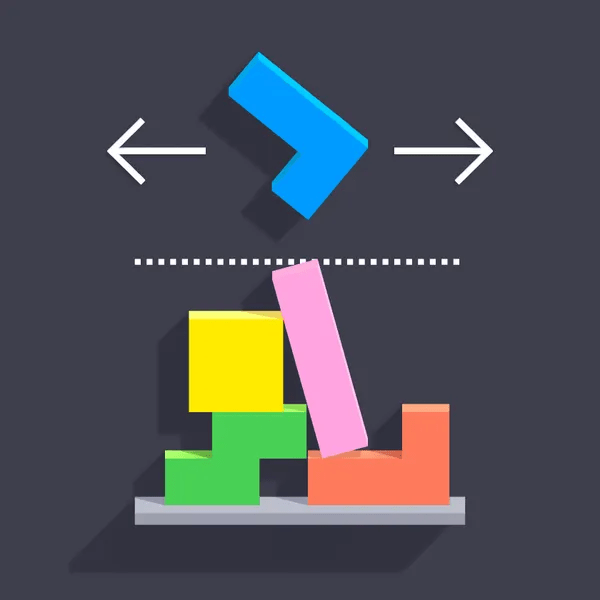
Stacktris makes a strong first impression because the rules are readable, but the challenge keeps stretching. Stacktris is the sort of puzzle game that looks clean on the surface but becomes more interesting once you start planning two or three moves ahead. The rules are readable, which is important, because the real challenge comes from what the current board position will become after your input settles. A strong play is usually the move that leaves room for the next one, not just the move that feels good immediately.
The main loop is simple to recognize, but the pressure comes from how quickly small choices stack up. The central loop is observation, commitment, and reassessment. You scan the state of the board, make a move that improves it without creating a larger problem, and then read the new situation before acting again. That pace gives Stacktris a thoughtful flow. There is pressure, but it is the pressure of consequences rather than a timer screaming at you. Every turn has weight because clutter or bad alignment tends to compound.
The clearest way to explain Stacktris is to focus on what you do moment to moment and what the game asks for as it ramps up. Mechanically, Stacktris is about managing space and planning ahead so each move creates options instead of closing them. If pieces fall, merge, rotate, or lock into place, the key is controlling your board shape and avoiding trapped pockets. Strong runs usually come from protecting flexibility and saving high-impact moves for when the board is tight.
The easiest way to play better is to notice which mistake keeps ending good attempts and fix that first. A reliable strategy is to protect structure. Keep your strongest position anchored, avoid unnecessary scattering, and do not spend a useful move just because it creates a quick reward. In Stacktris, patience usually beats impulse. It also helps to watch for trap states where a board still looks playable but has already lost flexibility. The earlier you recognize that, the more options you preserve.
Its best moments usually arrive without much warning: one sharp adjustment, one clean opening, and the stage feels under control again. A great moment in Stacktris comes when a board that seemed nearly stuck opens up from one disciplined move. Suddenly several future options appear, and the whole puzzle feels lighter. That sense of rescuing a messy situation through planning is more satisfying than simple luck and gives repeat attempts a lot of staying power.
A single example usually says more than a rules summary here. For example, a board can look safe while quietly shrinking your future options. One disciplined move that preserves shape may not look dramatic, but two turns later it gives you room for the merge or placement you actually needed. Stacktris is satisfying because those delayed benefits are real and readable.
Replay value comes from noticing details that were invisible on the first few tries. That replay value matters because puzzle games become flat if every board state leads to the same answer. Stacktris stays compelling by making structure, order, and restraint matter. A board can be technically playable and still awkward, which gives strong decisions real weight.
That compact structure gives Stacktris a very replayable feel. Whether you play for a quick break or stay long enough to chase a cleaner run, Stacktris has the kind of straightforward structure that makes improvement noticeable from one attempt to the next.
How to play Stacktris?
Use the controls shown in the game to move pieces, combine values, or interact with the board. The smartest way to play Stacktris is to think one or two turns ahead and protect the shape of the board while you work toward a stronger position. Avoid moves that create clutter just for a short-term reward, and keep your future options open whenever possible.
Controls
Desktop: TODO: verify the exact controls for this embedded build before publishing.
Similar games on Pizza Edition
- 2048 is a puzzle staple built around clean board management and thinking a few moves ahead.
- Block Blast is a spatial puzzle game that rewards planning for future placements instead of quick fixes.
- Brain Test is a more playful puzzle pick that focuses on reading the prompt and avoiding obvious traps.
Who created Stacktris?
Stacktris was created by Pizza Edition.
Can I play Stacktris on mobile devices and desktop?
Stacktris runs in your browser on desktop. Mobile support depends on the embedded version and how well its controls translate to touch devices, so performance and usability can vary between phones, tablets, and computers.